


farming techniques: ridge farming, border farming, field mu, Shenzhen field, district field, sand paving
farming techniques: ridge cultivation, border cultivation, field mu,Zhenfield, district field, sand paving
ridge cultivation
ridge cultivation is the creation of the working people in our country, that is, insoil tillage layer ridgingtables and furrows, cropsplanted on ridge platform.
Ridge cultivation is used all over the country, and it is more common in the northeast and Inner Mongolia. It is used to grow corn, soybean, millet and other crops, while cotton, sugarcane, sweet potato and other crops are grown in other areas. Ridge cultivation ground is wavy, the surface area increased by 25% ~ 30% than flat, increased the amount of solar radiation, the temperature on the ridge during the day is 2~3 higher than flat.℃, ridge cultivation at night has a large heat dissipation area and lower soil humidity than flat cultivation, which increases the daily difference of soil temperature and is conducive to crop fertility. In the rainwater harvesting season, the difference between ridge platform and ridge furrow is convenient for drainage and waterlogging prevention. In low-lying areas, ridge cultivation can improve farmland ecological conditions. Ridge cultivation can also reduce wind speed and wind erosion due to undulation of the ground, which can promote root growth, improve lodging resistance.
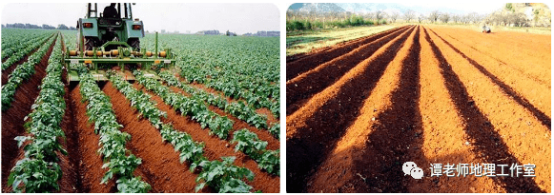
border cultivation
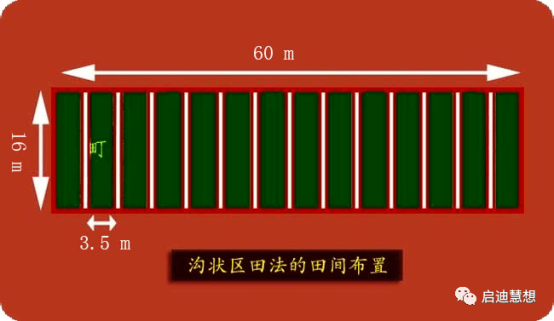
field separated by a ridge of soil is a furrow. Border cropping is a kind of cultivation method of intensive cultivation in China.
border cultivation are:border surface is not easyaccumulated water, furrows can be drained, which can avoid waterlogging and drought; Loose and fertile soil on the border, high soil temperature is conducive to crop growth; Reasonable dense planting, borderditch favorableventilation;furrows can also be usedof field trails or irrigation channels is convenient for field management; in low-temperature saline-alkali land, multi-row furrows can be used to drain water, reduce soil moisture evaporation, and prevent saline-alkali from returning to the ground.
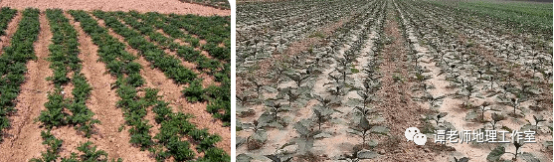
In different areas, the form of furrow should be determined according to the specific local conditions. In areas with little rain and need to be irrigated, the furrow should be leveled.border high stem; high furrows and deep ditches shall be adopted in places with much rain or low terrain. For example, the northern region is prone to drought in spring, so flat furrows are often used for planting. In Nanjing area, there is more rain, so high furrows should be used. In addition, the production of furrows should also consider the growth of crops and their management, for example, attention should be paid to ventilation and light transmission, easy pruning, fruit harvesting, etc.
field mu cultivation
field-mu method is one of the earliest drought-resistant farming methods in northern China, which is centered on soil moisture storage and conservation. Land-acre method,field and mucomposition.fieldis a furrow, mu is a ridge, and the field-mu method is also a ridge method. The use of land by this farming method includes "abandoning acres in the upper fields and abandoning acres in the lower fields."field"two ways.
field mu method: in high-lying fields, species will be planted in the ditch, not on the ridge, which is not called "abandoning mu on the field". In a low-lying field, the species will be planted on the ridge, not in the ditch, which is called "abandoning the field."field".Takata seed ditch not plantedridge, which is conducive to drought resistance and moisture preservation; lowfield ridge not plantedditch is conducive to drainage and waterlogging prevention, and is conducive to ventilation and light transmission.
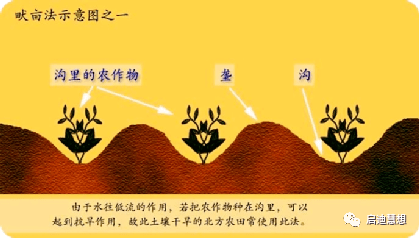
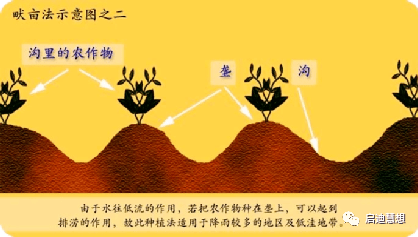
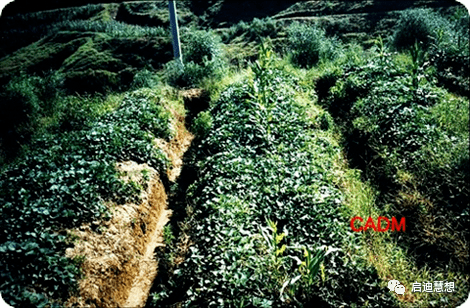
Zhenfield cultivation
Zhenfield is actually a horizontal terrace with a width of about 1 meter, and has a large water capacity, so it has a greater role in soil and water conservation. UseZhena field is calledZhenField Law.Zhenfield is to build furrows with a width of 50cm and a depth of 50cm every 50cm along the contour line direction, and combine layered fertilization to place the raw soil in the furrow outside the furrow to form a ridge, and then fill the top soil into the furrow. The length of the furrow is based on the width of the cultivated land.
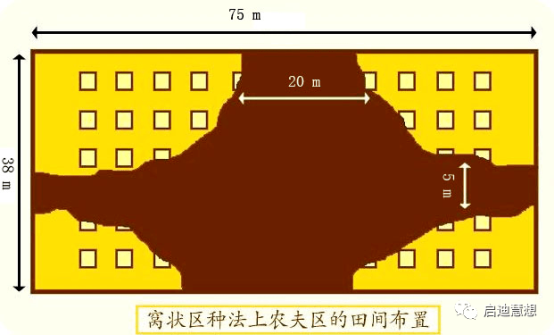
area
district field method, also known as the district planting method, is designed for drought resistance. One iswide areaseed method, one is a small square area seed method. The method is to plow the area deep and not plough the land outside the plot, so fertilization, irrigation, and intertillage and weeding are all carried out in the area. The area is equally spaced on-demand, which can ensure that the crops have good ventilation and light transmission conditions. Because the district field does not plough the adjacent land, only focuses on the deep ploughing in the area, which plays the role of anti-erosion and soil preservation. This feature has made full use of hillsides, hills and other uneven land, thus increasing the yield per unit area while expanding the area of arable land. The district farming method is an intensive farming method that concentrates on the use of manpower and material resources on a small area of land, intensively cultivates, drought prevention and high yield per unit area. The characteristics of the district field method are:(1) deep ploughing in the area. The characteristics of the district field in soil cultivation are deep cultivation area, deep cultivation within the area, and no land outside the area, so as to fully tap the potential of increasing production of the land in the area. (2) isometric on demand. The row spacing and plant spacing of the crops planted in the wide area field have certain specifications, which are in the form of equidistant on-demand. In the square area field, the size of the area, the distance between the areas and the number of plants in each area also have certain specifications, so it is also in the state of equidistant hole sowing. It can ensure that the crops have good ventilation and light transmission conditions. (3) Centralized management. Because the district field does not plow the adjacent land, fertilization, irrigation, and intertillage weeding are carried out in the area, so as to give full play to the role of human and material resources,., equidistant on-demand is also convenient for operation in the region. District law not only applies to flat landand Makata, it can also be used for sloping land and wasteland, which is conducive to expanding the scope of land use. In the area, comprehensive use of deep tillage, reasonable close planting, equidistant demand, fertilization and irrigation, strengthen management and other measures to obtain high yield.
sand field cultivation
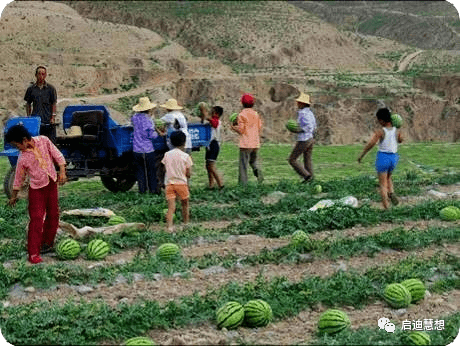
sand field is the river alluvial pebbles,Graveland sand is laid down on the soil surface of the farmland. This is a drought-resistant cultivation method created by the working people in the arid areas of northwest China in the long-term and drought struggle. According to the length of the sand field can be divided into new sand field, medium sand field and old sand field. Sand field method is to use river stones to pave the ground for three or four inches. When farming, sand and gravel are pulled out. When planting, sand and gravel are still taken to cover it. Crops grow and bear fruit from the cracks in the stone or between the stone layers. It is actually shown that a layer of pebbles on dry fields with scarce rain can play a role in storing water, reducing drought, inhibiting evaporation, controlling pantothenic, increasing soil temperature, and promoting ripening and increasing production. Using the sand field method, the high yield of grain, vegetables, melons and fruits can be obtained under the drought condition of annual precipitation 2. 300mm. Since its inception, this land use method has developed rapidly in the Longzhong region and expanded to parts of Ningxia and Qinghai.
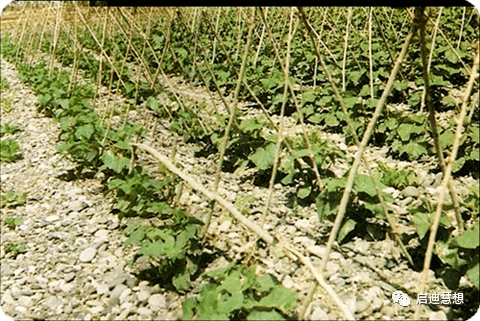
sand fields are as follows:①. Generally choose fertile soil, flat land. Before laying sand, the ground surface shall be leveled, plowed, raked and ground, and the soil shall be compacted. Then apply plantar fertilizer and spread the fertilizer on the surface of the soil. After the soil freezes in winter, sand can be laid.②farming. After sand laying, the soil is not directly tilled. However, in order to loosen the sand layer and remove weeds, the sand will be loosened after the previous crop is harvested and before sowing, and teacher tan's geography studio will make a comprehensive arrangement.loose sand can onlyin the sand layer, can not be put into soil.③sowing. Melons and vegetables are mostly planted in holes, the sand layer is removed according to a certain plant spacing, the soil is loosened by hand hoe, the seeds are put into the soil, the soil is covered flat, and then 3cm thick fine sand is covered.④fertilization. First, the sand layer is stripped to a row of about 66cm, fine sand is swept, fertilizer is evenly applied into the row, or a sand surface of 33cm square is stripped around the plant, fertilizer is turned into the soil, then rake and pat down, and sand and gravel are covered. Sand field method: is a special farming method with sand as mulch, which can greatly reduce soil moisture evaporation and increase soil moisture content. According to the investigation and determination, the soil water content of the sand field during the spring drought is 13.8, which can be sown and emerged.not covered with sandis only 7.2 per cent and cannot be sown.
