
Created on:2025-09-09

year: life sciences, AI, meta-universe, new energy, quantum computing

year: life sciences, AI, meta-universe, new energy, quantum computing

we are in a new cycle of technological innovation.

this seems fromhard technologyinnovation,industry-university-research conversionhas become more widely perceived as it gets louder and louder.

but if you take the year as the unit, what are the cutting-edge technologies and innovative breakthroughs--

is coming from behind the scenes to the front, from the laboratory to the industry, and is about to affect each of us...

suchAlphaFold2andComputational Biologyrelate?big modelandAIGChave to do with it?
the outbreak of the meta universe andXRbreakthrough?

and which cutting-edge technologies have come to the outbreak this year?

in order to allow more people to accurately grasp the cutting-edge technology trends, but also in orderhelp more.people connect the inner clues of technological breakthroughs and industrial outlets, but also to help everyone see the technology-driven future in advance..

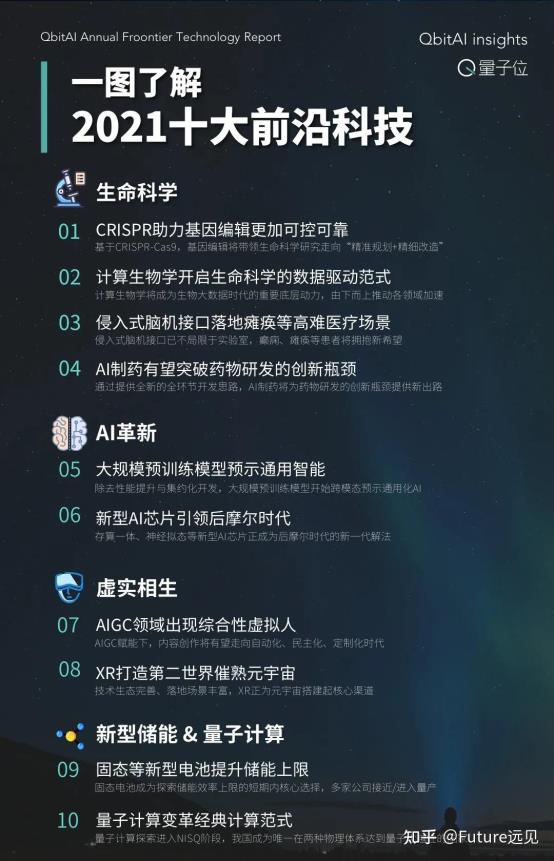
from the life sciences, AI, meta-universe, new energy and new computing and other five aspects, an article to see the annual cutting-edge scientific and technological progress.
img1

trendone:CRISPR helpsgene editingcontrollable and reliable
img2

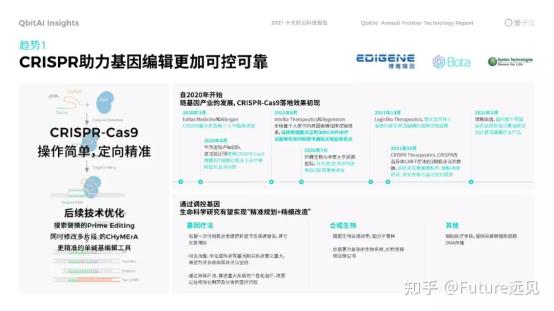
CRISPR-Cas9, is beingonestep by step to mature, from the laboratory to clinical applications.

last June,. Two companies--Intelliaand Regeneron together demonstrate for the first time that,In Vivo Therapy Effectively Suppresses Protein Expression Associated with Genetic Diseases.

domestic,Boya's-related CRISPR therapy research product ET-01 has become the first domesticState Food and Drug Administrationapproval to carry outbed testgene editing therapy products.

After finding a suitable gene delivery vector, further deepening genomics research, and solving long-term stability issues, gene editing will bedisease treatmentandmodification of speciescreate a new blue ocean.

gene therapy, in theory, it can completely cure all genetic diseases caused by congenital gene defects and cancers caused by gene mutations. At the same time, gene-related diseases such as blood tumors and rare genetic diseases are of great significance and are expected to fill the gaps in therapy for more diseases.

In addition, gene editing can also be combined with cell therapy to complete in vitro gene therapy such as CAR-T cell therapy.

In the view of the industry, the rapid and targeted preparation of cells (especially allogeneic cells) needed by patients based on the patient's condition is expected to promote personalized treatment of major diseases in the future and change the medical process of standardized production and distribution of drugs in the past.

and insynthetic biologyapplications can be used to create more complex biological systems using different genetic control modules.

molecular breeding, as one of the representative fields, compared with the traditional use of phenotype and natural selection screening methods, combined with gene editing can purposefully change the stress tolerance, composition, yield, reproduction and other traits of species, shorten the domestication cycle of species, and create species with better traits.

In addition, it is also playing a role in the fields of assisting other medical methods and DNA storage.

a brief summary, based on gene editing technology, life science research is expected to achieve "precise planning + fine transformation 」.

Trend 2: Life sciences usher in a data-driven era
img3

AlphaFold, a AlphaGo in the field of computational biology.

But the reality is just a microcosm of the booming development of computational biology, the background is that computational biology is leading the life sciencesData Driven.

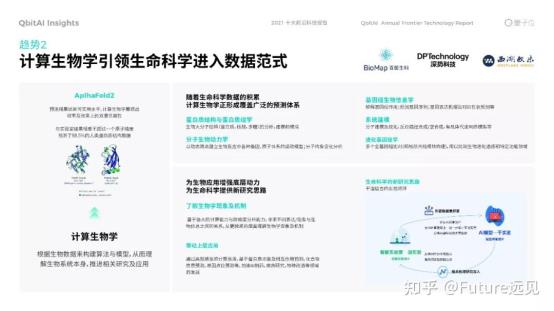
, with the continuous maturity of high-throughput sequencing, nano-operation, biochip and other technologies, biological information data continues to accumulate, and computational biology is also developed. It builds algorithms and models to understand biological phenomena and mechanisms at the molecular level, and promotes related research and applications.

core representative is AlphaFold2.

using the original experimental methods (X-ray diffraction, cryo-electron microscopy), the efforts of scientists in the past decades have only covered 17% of the amino acid residues in the human protein sequence.

specifically, in promotingBiology Research, computational biology is currently forming a multi-dimensional prediction system, including protein structure and proteomics, molecular biodynamics, genomic bioinformatics, system modeling, evolutionary genomics......

scientists can be based on its powerful computing power andcross-dimensional analysisability to seek the relationship between different expressions/phenomena and biological information.

At the same time, computational biology can be driven by efficient and precise computational deduction.upper application:

based on protein function and interaction prediction, compound properties prediction, gene pointbit prediction, etc., acceleratedAI Pharmaceuticals, disease research, species modification and other areas of development.

computational biology also provides new research ideas for life sciences--「Closed Loop of Wet and Dry Data.

first covers the search space with sufficient and abundant quantitative dry experiments (AI models) to provide accurate assumptions for testing in the wet laboratory (traditional biological experiments), and the two together iteratively accelerate.

include AI interpretability of biological problems, experimental equipment that provides high-quality data, and the integration and standardization of multiple types of data.

trend three:Invasionbrain-computer interfacelanding difficult medical scene
img4

medical rehabilitation,brain-computer interfacefield has always been expected.

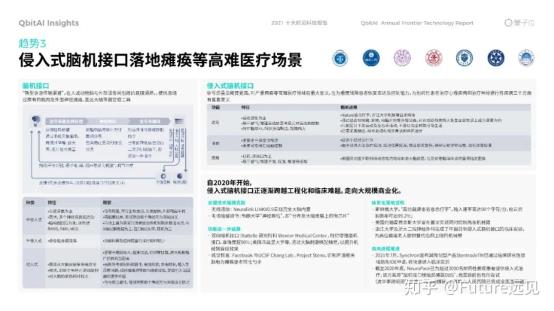
is non-invasive compared to the lower technical thresholdbrain-computer interface, Invasionscenes tend to be more refined and the underlying principles are more complex, but they are of great significance in difficult medical fields such as severe paralysis.

is mainly reflected in three aspects: exercise, emotion and perception: helping people with disabilities to restore control and expression ability; helping patients with depression, addiction and other diseases to adjust their psychological state; treating neurodegenerative diseases such as Alzheimer's disease.

Nowadays, with the development of wireless communication, multi-channel flexible electrodes, implantation means, chips, machine learning algorithms and other technologies,Invasive Brain Pick-upmouth is gradually across the engineering and clinical problems.

this year to board the Nature mind typing technology as a representative, intrusion.brain-computer interfacehas demonstrated clinical trials with ideal results, and commercial development is beginning to take shape.

national policy, our country invaded.brain-computer interfacealso began to accelerate development: Tsinghua Li Luming team developed the second generation of brain pacemakers; Ruijin Hospital carried out clinical trials for the treatment of severe depression; Department of Neurosurgery of Zhejiang University and the Second Hospital of Zhejiang University completed the first case of invasion in Chinabrain-computer interfaceclinical trials have installed robotic arms for the elderly with high paraplegia; as well as Tsinghua University, Tianjin University, Shanghai Jiaotong University, Chinese Academy of Sciences, South China University of Technology and other universities have established key scientific research teams.

after scientists learn more about how the brain works, such as the perceptual regions,brain-computer interfacewill play a more important role in helping patients restore certain sensory abilities such as touch and vision.

Trend 4: AI Pharmaceuticals Provides New Solution for Pharmaceutical Research and Development
img5

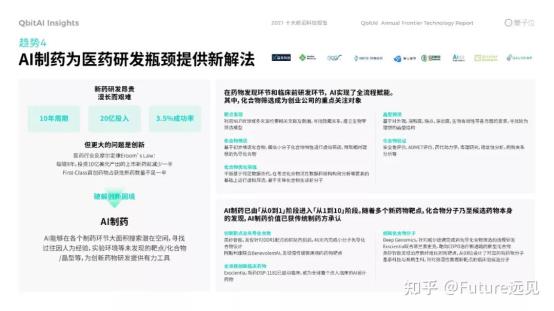
traditional drug development is an expensive, long and difficult process. In addition to high cost, long cycle, success ratelow thesedilemma, the greater bottleneck facing drug research and development lies in innovation.

in the pharmaceutical field, there iswell-known anti-Moore's law-Every nine years, $1 billion of new drugs are produced by half. More commonly, first-in-class drugs account for less than half of the total number of approved new drugs.

, with the development of computer biology and artificial intelligence, AI can search for potential space in various pharmaceutical links, looking for targets/compounds/crystal forms that have not been found in the past due to human experience, experimental environment and other external constraints, providing a powerful tool for innovative drug development.

AI pharmaceutical has entered the stage from "from 0 to 1" to "from 1 to 10", AI design drugs of many enterprises have entered clinical trials, and large AI pharmaceutical alliances dominated by traditional pharmaceutical enterprises have also blossomed.

After further development, however, data bottlenecks cannot be ignored: insufficient high-quality R & D data, and the inverse ratio of available data to target value in pharmaceutical R & D.

, however, there are already corresponding solutions in the industry, such as the establishment of drug big data laboratories and multidisciplinary integration.

From a longer-term perspective, drug optimization is essentially a multi-objective optimization process. At present, the AI pharmaceutical industry is mostly stuck in the local breakthrough of technical problems, that is, repeated iterations for specific properties (targeting, stability, absorption, etc.).

How to meet the diversified needs of AI model at one time based on the idea of overall optimization has become the focus of attention of AI pharmaceutical enterprises at home and abroad.

Trend 5: Multi-modal multi-dimensional large models foreshadow general intelligence.
img6

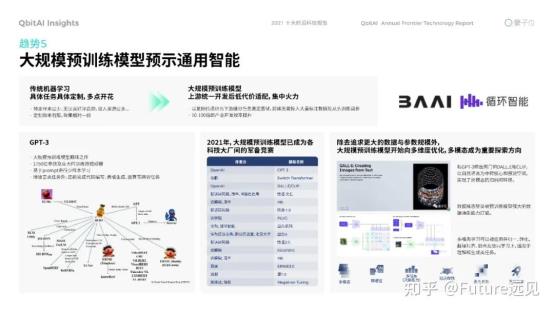
2021, it has become an arms race for Google, Ali, Huawei, Baidu, Microsoft and other major manufacturers on a large scale. The development ideas of technology companies have changed from a multi-point flowering model to a concentrated firepower..

Because of its versatility and small sample learning capabilities, large models are bringing intensive new development models and business models to AI. At the same time, cross-modalpre-trainingmodels (e. g., DALL-E, CLIP) heralded the realizability of general intelligence.

industry generally believes that 「a development, life-long use」.

a more general model will lay the foundation for subdivision tasks, and subsequent applications do not need to invest in large amounts of labeled data and training parameters from scratch, thus significantly improving efficiency.

, parameter quantity is not only the only index pursued by large models. Factors such as multi-modal, multi-dimensional functions (cross-language, multi-task), efficiency, knowledge enhancement, and high efficiency have become the focus of existing models.

multimodal learning has become an important trend, which can be applied to normalization, transformation, translation alignment, fusion and collaborative learning. According to the downstream tasks, it can be divided into visual question and answer, visual reasoning, graphic retrieval and other understanding.Tasksand generative tasks (text to generate images).

due to cross-domain common, large-scalepre-trainingmodel may play a role as an intermediate layer of a similar infrastructure ecology, taking on a transitional role for different industry ecosystems.

at the application layer, it also brings opportunities for the application and development of artificial intelligence in various industries, such as automated content generation, content translation, and robot dialogue. Large models also improve their own performance in this process, playing the iterative effect of data closed loop.

Trend 6: New AI chips lead the post-Moore era
img7

As AI is widely used in various scenarios, traditionalRely on Processimproved AI chips are difficult to meet demand.

in the future of the three major evolution of integrated circuits,.'s complete architecture innovation has become the key direction of the next generation of AI chips..

in this, brain-like computing,deposit and calculation integration,quantum computing, data stream AI computing are options.

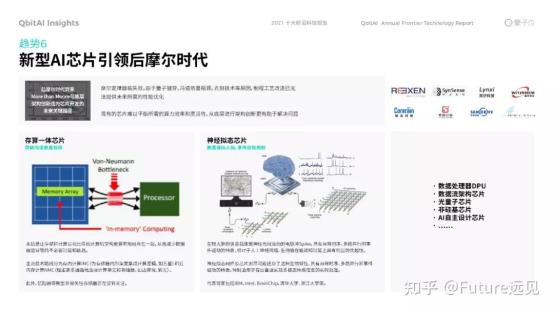
take the example of an event-driven neuromorphic chip developed following the example of the human brain. By mimicking as much as possible the way electrical impulses are transmitted between neurons, the neuromorphic chip naturally conforms to the event-driven mechanism,and integrated storage and calculation, there is a significant reduction in time delay and energy consumption. International representationvendors include IBM, Intel,BrainChip; domestic participants include Tsinghua University's Tianji movement (later transformed into a spiritSunseekerScience and Technology), Zhejiang University, etc.

again.look.DepositOne Chip.

traditional chipseparation by storage, there is a famous von Neumann bottleneck. Due to the different process packaging requirements, the development speed difference between the processor and the memory is increasing, and the chip computing power is severely restricted by the storage unit in terms of bandwidth and delay. This is particularly prominent in edge computing scenarios such as unmanned driving.

and save and calculate as oneis that storage and computing are more closely combined to reduce unnecessary delay and energy consumption caused by data handling.

There are currently two types of mainstream routes: in-memory calculations that directly allow storage units to implement computational functions; and in-memory calculations that are tightly coupled to storage units and computational logic but are still performed by independent computational units.

in addition to the chip design that changes the underlying architecture, AI chips have other problems to overcome, such as the balance of performance and programming flexibility, chip IP barriers, supply chain security, and application ecology.

Based on different scenarios, analysts combed the corresponding new chips, which are roughly divided into data processor DPUs, data flow architecture chips, optical quantum chips, non-silicon-based chips, and AI self-designed chips.

Trend 7: AIGC field appears comprehensive virtual human
img8

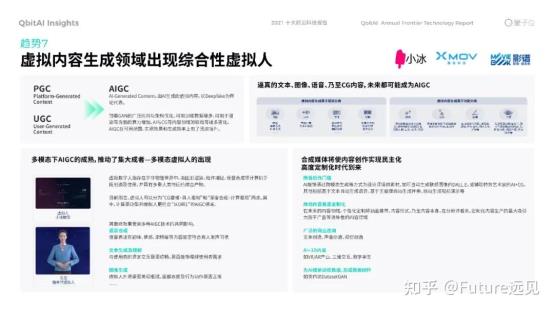
AIGC,AI generates virtual content to represent the Deepfake of replacing faces in videos in 2018. GAN, largepre-trainingmodels, autoencoders, etc. are commonly used technical means in the field of AIGC.

With the development of in-depth learning, AI-generated virtual content AIGC is penetrating various fields such as images, videos, CG, AI training data, etc., and even covers multi-modal virtual human technology at the same time.

virtual digital human, which exists in the non-physical world and is composed of computer hands such as graphics rendering, motion capture, speech synthesis, etc.paragraph creationand use, and has a comprehensive product of multiple human characteristics. Currently divided"CG modeling live-driven 」and"deep synthesis calculation driven 」two categories.

, the final effect of computing-driven virtual human is influenced by a variety of AI generation technologies, such as voice generation, text generation and understanding, image generation, and so on.

content creation has been highly dependent on people in the early stage, and has gradually changed to "human computing power. In addition to being directly applied to content-related business scenarios (news, audiobooks, industrial design, etc.),AI also greatly reduces the generation threshold and promotes highly customized, automated and democratized content creation.

trend eight: XR to create a second world ripening yuan universe
img9

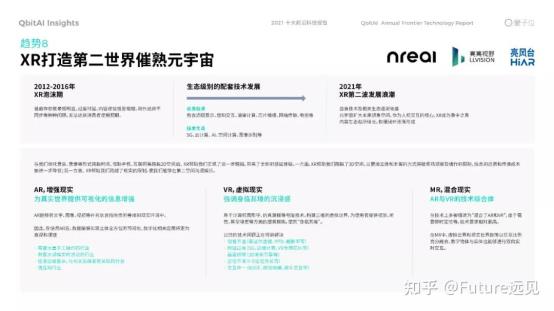
2021,meta universehas become a well-deserved hot vocabulary. In its seven-layer division, because the feeling is the most intuitive, human-computer interaction involving displays, sensors, tracking equipment, positioning equipment, etc. has become a key link.

as itsCore Carrier XR, ushered in the second wave of climax.

has its own poor technical indicators, imperfect technology supporting system ecology, lack of landing application and other problems, XR has been systematically promoted in this round.

XR's technology ecology is widely related, including near-eye display, perception interaction, chip module, network transmission, battery, etc., in addition to 5G, cloud computing, AI and other technologies.

this year, the overall technology ecology is maturing. By improving the optical devices, spatial computing, heterogeneous computing system, rendering engine, interactive freedom, positioning and other elements, the past viewing discomfort, rough picture and other problems have been solved.

relied on audio recording, video recording and other forms to cross the time, and with the help of mobile phones, the Internet and other 2D space, XR took us to achieve a further leap.

has helped us to cross the 3D space and break through the limitations of on-site observation and operation in a more three-dimensional and realistic way, and the cost of information restoration and transmission has been further reduced; on the other hand, XR has helped us to cross the limitations of reality and enable us to communicate and entertain in the second space.

trend nine: solid state and other new batteries to enhance the upper limit of energy storage
img10

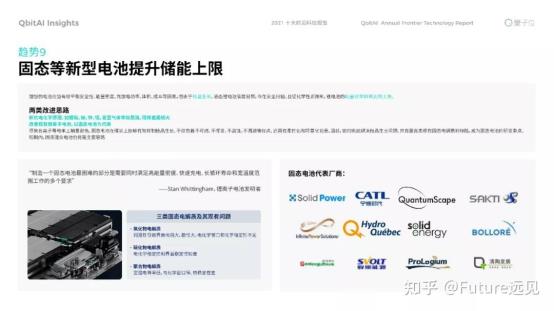
The ideal battery should effectively balance safety, energy density, charge and discharge power, volume, cost and other factors.

However, even the most widely used lithium-ion batteries, it is difficult to completely solve.dendrites leadflammable problems, there are obvious shortcomings in safety. At the same time, limited by chemical properties, the energy efficiency of lithium batteries is about to reach the upper limit, and it is difficult to meet future energy storage needs.

to solve the current dilemma, the development of new power batteries can be roughly divided into two categories.

one is to replace the original based.lithiumIons, focusing on the development of new ideas based on lithium sulfur, sodium, zinc, aluminum, and even gases, but it is difficult to replace them in the short term.

two is to improve the existing lithium battery, such as in the electrolyte, positive and negative materials, conductive agent optimization and other aspects of further improvement, to this year part of the mass production.solid state batteryas representative.

solid-state batteries replace liquid electrolytes with solid electrolytes, although slightly inferior in ionic conductivity, due to the theoretical ability to effectively suppresslithium dendritehas obvious advantages in safety, and also has great advantages in flexibility and portability.

, however, existing solid-state batteries still have limitations,solid-liquid combinationbatteries are bound to be a transition. In order to promote the commercial application of cutting-edge technologies, cooperation between lithium battery manufacturers and relevant laboratories has become the norm.

Trend 10: Quantum Computing Transforms the Classical Computing Paradigm
img11

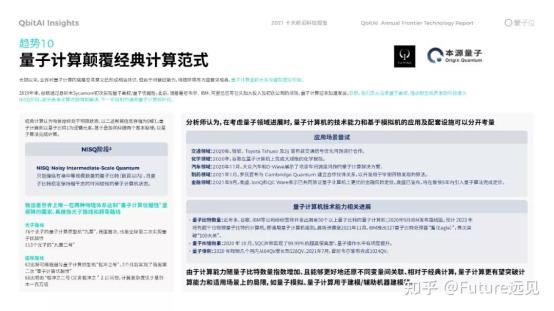
, the Chinese team, led by the China University of Science and Technology, has come to the forefront of the world in the hardware research and development of quantum computing in 2021.

currently,China is the only country in the world that has reached the milestone of "quantum computing superiority" in two physical systems.. Specifically, it refers to the photon route represented by the nine chapters and the superconducting route represented by the Zu Chongzhi.

, in terms of applications and supporting facilities, the fields of finance, medicine, automobiles, and chemistry have clarified the use of quantum computing under specific problems.

chips, operating systems, and one-stop platforms have also emerged. For example, Baidu Quantum Platform docks superconducting quantum chips from the Institute of Physics of the Chinese Academy of Sciences, and releases cloud-native quantum computing platforms. The start-up company Origin Quantum has also released China's first quantum computing operating system Origin Sinan, the first domestic quantum computing company "Turing Quantum", and independently developed it.Domestic FirstCommercial Optical Quantum Computing Simulation SoftwareFeynmanPAQSrecently released......

in the micro simulation, complex modeling and other specific problems, quantum computing shows the advantages of classical computing is difficult to achieve. the future,Supercomputing Centerquantum-classical hybrid architectures may emerge, with quantum and classical computing cooperating to solve specific large-scale problems.

先进前沿技术

Created on:2025-09-09

year: life sciences, AI, meta-universe, new energy, quantum computing

year: life sciences, AI, meta-universe, new energy, quantum computing

we are in a new cycle of technological innovation.

this seems fromhard technologyinnovation,industry-university-research conversionhas become more widely perceived as it gets louder and louder.

but if you take the year as the unit, what are the cutting-edge technologies and innovative breakthroughs--

is coming from behind the scenes to the front, from the laboratory to the industry, and is about to affect each of us...

suchAlphaFold2andComputational Biologyrelate?big modelandAIGChave to do with it?
the outbreak of the meta universe andXRbreakthrough?

and which cutting-edge technologies have come to the outbreak this year?

in order to allow more people to accurately grasp the cutting-edge technology trends, but also in orderhelp more.people connect the inner clues of technological breakthroughs and industrial outlets, but also to help everyone see the technology-driven future in advance..

from the life sciences, AI, meta-universe, new energy and new computing and other five aspects, an article to see the annual cutting-edge scientific and technological progress.

img1

trendone:CRISPR helpsgene editingcontrollable and reliable

img2

CRISPR-Cas9, is beingonestep by step to mature, from the laboratory to clinical applications.

last June,. Two companies--Intelliaand Regeneron together demonstrate for the first time that,In Vivo Therapy Effectively Suppresses Protein Expression Associated with Genetic Diseases.

domestic,Boya's-related CRISPR therapy research product ET-01 has become the first domesticState Food and Drug Administrationapproval to carry outbed testgene editing therapy products.

After finding a suitable gene delivery vector, further deepening genomics research, and solving long-term stability issues, gene editing will bedisease treatmentandmodification of speciescreate a new blue ocean.

gene therapy, in theory, it can completely cure all genetic diseases caused by congenital gene defects and cancers caused by gene mutations. At the same time, gene-related diseases such as blood tumors and rare genetic diseases are of great significance and are expected to fill the gaps in therapy for more diseases.

In addition, gene editing can also be combined with cell therapy to complete in vitro gene therapy such as CAR-T cell therapy.

In the view of the industry, the rapid and targeted preparation of cells (especially allogeneic cells) needed by patients based on the patient's condition is expected to promote personalized treatment of major diseases in the future and change the medical process of standardized production and distribution of drugs in the past.

and insynthetic biologyapplications can be used to create more complex biological systems using different genetic control modules.

molecular breeding, as one of the representative fields, compared with the traditional use of phenotype and natural selection screening methods, combined with gene editing can purposefully change the stress tolerance, composition, yield, reproduction and other traits of species, shorten the domestication cycle of species, and create species with better traits.

In addition, it is also playing a role in the fields of assisting other medical methods and DNA storage.

a brief summary, based on gene editing technology, life science research is expected to achieve "precise planning + fine transformation 」.

Trend 2: Life sciences usher in a data-driven era

img3

AlphaFold, a AlphaGo in the field of computational biology.

But the reality is just a microcosm of the booming development of computational biology, the background is that computational biology is leading the life sciencesData Driven.

, with the continuous maturity of high-throughput sequencing, nano-operation, biochip and other technologies, biological information data continues to accumulate, and computational biology is also developed. It builds algorithms and models to understand biological phenomena and mechanisms at the molecular level, and promotes related research and applications.

core representative is AlphaFold2.

using the original experimental methods (X-ray diffraction, cryo-electron microscopy), the efforts of scientists in the past decades have only covered 17% of the amino acid residues in the human protein sequence.

specifically, in promotingBiology Research, computational biology is currently forming a multi-dimensional prediction system, including protein structure and proteomics, molecular biodynamics, genomic bioinformatics, system modeling, evolutionary genomics......

scientists can be based on its powerful computing power andcross-dimensional analysisability to seek the relationship between different expressions/phenomena and biological information.

At the same time, computational biology can be driven by efficient and precise computational deduction.upper application:

based on protein function and interaction prediction, compound properties prediction, gene pointbit prediction, etc., acceleratedAI Pharmaceuticals, disease research, species modification and other areas of development.

computational biology also provides new research ideas for life sciences--「Closed Loop of Wet and Dry Data.

first covers the search space with sufficient and abundant quantitative dry experiments (AI models) to provide accurate assumptions for testing in the wet laboratory (traditional biological experiments), and the two together iteratively accelerate.

include AI interpretability of biological problems, experimental equipment that provides high-quality data, and the integration and standardization of multiple types of data.

trend three:Invasionbrain-computer interfacelanding difficult medical scene

img4

medical rehabilitation,brain-computer interfacefield has always been expected.

is non-invasive compared to the lower technical thresholdbrain-computer interface, Invasionscenes tend to be more refined and the underlying principles are more complex, but they are of great significance in difficult medical fields such as severe paralysis.

is mainly reflected in three aspects: exercise, emotion and perception: helping people with disabilities to restore control and expression ability; helping patients with depression, addiction and other diseases to adjust their psychological state; treating neurodegenerative diseases such as Alzheimer's disease.

Nowadays, with the development of wireless communication, multi-channel flexible electrodes, implantation means, chips, machine learning algorithms and other technologies,Invasive Brain Pick-upmouth is gradually across the engineering and clinical problems.

this year to board the Nature mind typing technology as a representative, intrusion.brain-computer interfacehas demonstrated clinical trials with ideal results, and commercial development is beginning to take shape.

national policy, our country invaded.brain-computer interfacealso began to accelerate development: Tsinghua Li Luming team developed the second generation of brain pacemakers; Ruijin Hospital carried out clinical trials for the treatment of severe depression; Department of Neurosurgery of Zhejiang University and the Second Hospital of Zhejiang University completed the first case of invasion in Chinabrain-computer interfaceclinical trials have installed robotic arms for the elderly with high paraplegia; as well as Tsinghua University, Tianjin University, Shanghai Jiaotong University, Chinese Academy of Sciences, South China University of Technology and other universities have established key scientific research teams.

after scientists learn more about how the brain works, such as the perceptual regions,brain-computer interfacewill play a more important role in helping patients restore certain sensory abilities such as touch and vision.

Trend 4: AI Pharmaceuticals Provides New Solution for Pharmaceutical Research and Development

img5

traditional drug development is an expensive, long and difficult process. In addition to high cost, long cycle, success ratelow thesedilemma, the greater bottleneck facing drug research and development lies in innovation.

in the pharmaceutical field, there iswell-known anti-Moore's law-Every nine years, $1 billion of new drugs are produced by half. More commonly, first-in-class drugs account for less than half of the total number of approved new drugs.

, with the development of computer biology and artificial intelligence, AI can search for potential space in various pharmaceutical links, looking for targets/compounds/crystal forms that have not been found in the past due to human experience, experimental environment and other external constraints, providing a powerful tool for innovative drug development.

AI pharmaceutical has entered the stage from "from 0 to 1" to "from 1 to 10", AI design drugs of many enterprises have entered clinical trials, and large AI pharmaceutical alliances dominated by traditional pharmaceutical enterprises have also blossomed.

After further development, however, data bottlenecks cannot be ignored: insufficient high-quality R & D data, and the inverse ratio of available data to target value in pharmaceutical R & D.

, however, there are already corresponding solutions in the industry, such as the establishment of drug big data laboratories and multidisciplinary integration.

From a longer-term perspective, drug optimization is essentially a multi-objective optimization process. At present, the AI pharmaceutical industry is mostly stuck in the local breakthrough of technical problems, that is, repeated iterations for specific properties (targeting, stability, absorption, etc.).

How to meet the diversified needs of AI model at one time based on the idea of overall optimization has become the focus of attention of AI pharmaceutical enterprises at home and abroad.

Trend 5: Multi-modal multi-dimensional large models foreshadow general intelligence.

img6

2021, it has become an arms race for Google, Ali, Huawei, Baidu, Microsoft and other major manufacturers on a large scale. The development ideas of technology companies have changed from a multi-point flowering model to a concentrated firepower..

Because of its versatility and small sample learning capabilities, large models are bringing intensive new development models and business models to AI. At the same time, cross-modalpre-trainingmodels (e. g., DALL-E, CLIP) heralded the realizability of general intelligence.

industry generally believes that 「a development, life-long use」.

a more general model will lay the foundation for subdivision tasks, and subsequent applications do not need to invest in large amounts of labeled data and training parameters from scratch, thus significantly improving efficiency.

, parameter quantity is not only the only index pursued by large models. Factors such as multi-modal, multi-dimensional functions (cross-language, multi-task), efficiency, knowledge enhancement, and high efficiency have become the focus of existing models.

multimodal learning has become an important trend, which can be applied to normalization, transformation, translation alignment, fusion and collaborative learning. According to the downstream tasks, it can be divided into visual question and answer, visual reasoning, graphic retrieval and other understanding.Tasksand generative tasks (text to generate images).

due to cross-domain common, large-scalepre-trainingmodel may play a role as an intermediate layer of a similar infrastructure ecology, taking on a transitional role for different industry ecosystems.

at the application layer, it also brings opportunities for the application and development of artificial intelligence in various industries, such as automated content generation, content translation, and robot dialogue. Large models also improve their own performance in this process, playing the iterative effect of data closed loop.

Trend 6: New AI chips lead the post-Moore era

img7

As AI is widely used in various scenarios, traditionalRely on Processimproved AI chips are difficult to meet demand.

in the future of the three major evolution of integrated circuits,.'s complete architecture innovation has become the key direction of the next generation of AI chips..

in this, brain-like computing,deposit and calculation integration,quantum computing, data stream AI computing are options.

take the example of an event-driven neuromorphic chip developed following the example of the human brain. By mimicking as much as possible the way electrical impulses are transmitted between neurons, the neuromorphic chip naturally conforms to the event-driven mechanism,and integrated storage and calculation, there is a significant reduction in time delay and energy consumption. International representationvendors include IBM, Intel,BrainChip; domestic participants include Tsinghua University's Tianji movement (later transformed into a spiritSunseekerScience and Technology), Zhejiang University, etc.

again.look.DepositOne Chip.

traditional chipseparation by storage, there is a famous von Neumann bottleneck. Due to the different process packaging requirements, the development speed difference between the processor and the memory is increasing, and the chip computing power is severely restricted by the storage unit in terms of bandwidth and delay. This is particularly prominent in edge computing scenarios such as unmanned driving.

and save and calculate as oneis that storage and computing are more closely combined to reduce unnecessary delay and energy consumption caused by data handling.

There are currently two types of mainstream routes: in-memory calculations that directly allow storage units to implement computational functions; and in-memory calculations that are tightly coupled to storage units and computational logic but are still performed by independent computational units.

in addition to the chip design that changes the underlying architecture, AI chips have other problems to overcome, such as the balance of performance and programming flexibility, chip IP barriers, supply chain security, and application ecology.

Based on different scenarios, analysts combed the corresponding new chips, which are roughly divided into data processor DPUs, data flow architecture chips, optical quantum chips, non-silicon-based chips, and AI self-designed chips.

Trend 7: AIGC field appears comprehensive virtual human

img8

AIGC,AI generates virtual content to represent the Deepfake of replacing faces in videos in 2018. GAN, largepre-trainingmodels, autoencoders, etc. are commonly used technical means in the field of AIGC.

With the development of in-depth learning, AI-generated virtual content AIGC is penetrating various fields such as images, videos, CG, AI training data, etc., and even covers multi-modal virtual human technology at the same time.

virtual digital human, which exists in the non-physical world and is composed of computer hands such as graphics rendering, motion capture, speech synthesis, etc.paragraph creationand use, and has a comprehensive product of multiple human characteristics. Currently divided"CG modeling live-driven 」and"deep synthesis calculation driven 」two categories.

, the final effect of computing-driven virtual human is influenced by a variety of AI generation technologies, such as voice generation, text generation and understanding, image generation, and so on.

content creation has been highly dependent on people in the early stage, and has gradually changed to "human computing power. In addition to being directly applied to content-related business scenarios (news, audiobooks, industrial design, etc.),AI also greatly reduces the generation threshold and promotes highly customized, automated and democratized content creation.

trend eight: XR to create a second world ripening yuan universe

img9

2021,meta universehas become a well-deserved hot vocabulary. In its seven-layer division, because the feeling is the most intuitive, human-computer interaction involving displays, sensors, tracking equipment, positioning equipment, etc. has become a key link.

as itsCore Carrier XR, ushered in the second wave of climax.

has its own poor technical indicators, imperfect technology supporting system ecology, lack of landing application and other problems, XR has been systematically promoted in this round.

XR's technology ecology is widely related, including near-eye display, perception interaction, chip module, network transmission, battery, etc., in addition to 5G, cloud computing, AI and other technologies.

this year, the overall technology ecology is maturing. By improving the optical devices, spatial computing, heterogeneous computing system, rendering engine, interactive freedom, positioning and other elements, the past viewing discomfort, rough picture and other problems have been solved.

relied on audio recording, video recording and other forms to cross the time, and with the help of mobile phones, the Internet and other 2D space, XR took us to achieve a further leap.

has helped us to cross the 3D space and break through the limitations of on-site observation and operation in a more three-dimensional and realistic way, and the cost of information restoration and transmission has been further reduced; on the other hand, XR has helped us to cross the limitations of reality and enable us to communicate and entertain in the second space.

trend nine: solid state and other new batteries to enhance the upper limit of energy storage

img10

The ideal battery should effectively balance safety, energy density, charge and discharge power, volume, cost and other factors.

However, even the most widely used lithium-ion batteries, it is difficult to completely solve.dendrites leadflammable problems, there are obvious shortcomings in safety. At the same time, limited by chemical properties, the energy efficiency of lithium batteries is about to reach the upper limit, and it is difficult to meet future energy storage needs.

to solve the current dilemma, the development of new power batteries can be roughly divided into two categories.

one is to replace the original based.lithiumIons, focusing on the development of new ideas based on lithium sulfur, sodium, zinc, aluminum, and even gases, but it is difficult to replace them in the short term.

two is to improve the existing lithium battery, such as in the electrolyte, positive and negative materials, conductive agent optimization and other aspects of further improvement, to this year part of the mass production.solid state batteryas representative.

solid-state batteries replace liquid electrolytes with solid electrolytes, although slightly inferior in ionic conductivity, due to the theoretical ability to effectively suppresslithium dendritehas obvious advantages in safety, and also has great advantages in flexibility and portability.

, however, existing solid-state batteries still have limitations,solid-liquid combinationbatteries are bound to be a transition. In order to promote the commercial application of cutting-edge technologies, cooperation between lithium battery manufacturers and relevant laboratories has become the norm.

Trend 10: Quantum Computing Transforms the Classical Computing Paradigm

img11

, the Chinese team, led by the China University of Science and Technology, has come to the forefront of the world in the hardware research and development of quantum computing in 2021.

currently,China is the only country in the world that has reached the milestone of "quantum computing superiority" in two physical systems.. Specifically, it refers to the photon route represented by the nine chapters and the superconducting route represented by the Zu Chongzhi.

, in terms of applications and supporting facilities, the fields of finance, medicine, automobiles, and chemistry have clarified the use of quantum computing under specific problems.

chips, operating systems, and one-stop platforms have also emerged. For example, Baidu Quantum Platform docks superconducting quantum chips from the Institute of Physics of the Chinese Academy of Sciences, and releases cloud-native quantum computing platforms. The start-up company Origin Quantum has also released China's first quantum computing operating system Origin Sinan, the first domestic quantum computing company "Turing Quantum", and independently developed it.Domestic FirstCommercial Optical Quantum Computing Simulation SoftwareFeynmanPAQSrecently released......

in the micro simulation, complex modeling and other specific problems, quantum computing shows the advantages of classical computing is difficult to achieve. the future,Supercomputing Centerquantum-classical hybrid architectures may emerge, with quantum and classical computing cooperating to solve specific large-scale problems.